Easy SortedSet
概念
我们有一堆数据,希望能够支持快速的插入、删除、查询以及范围查询
我们都知道数组进行排序后,可以通过二分查找的方式快速定位数据,时间复杂度是$O(LogN)$,但是如果数组经常发生插入、删除操作,就需要进行大量平移,时间复杂度是$O(N)$。
那用平衡树呢?AVL树、红黑树都是经过深度优化的动态数据结构,他们的插入删除查找都可以在$O(LogN)$的时间内完成,但是他们实现起来较为复杂,且对于范围查询,还需要进行中序遍历,但至少比数组好多了。
那链表呢,链表的插入删除是很方便,但关键查询呢,它能进行二分查找吗?链表无法随机访问,怎么二分?很显然,直接对普通链表进行二分查找是困难的。1990年,Pugh发表论文《Skip Lists: A Probabilistic Alternative to Balanced Trees》,创造性的提出了自己的解决方案:”如果不能在节点间跳跃,那就建造可以跳跃的桥梁吧!”,跳跃表(SkipList)正式被提出。
跳跃表是一种概率性的有序数据结构,通过建立多级索引来加速查找,可以看作是在链表基础上加了“快速通道”,变相了实现对链表的二分查找,并且,范围查找也能够很轻易的完成,只要找到目标,就可以沿着链条依次访问。
游戏里排行榜一般是采用Redis Sorted Set,它在数据规模较大时的底层数据结构就是跳跃表+哈希表。
- 跳跃表:天然支持有序插入、删除和范围查询,时间复杂度O(log n)
- 哈希表:用于快速查找特定用户的当前位置和分数(O(1))
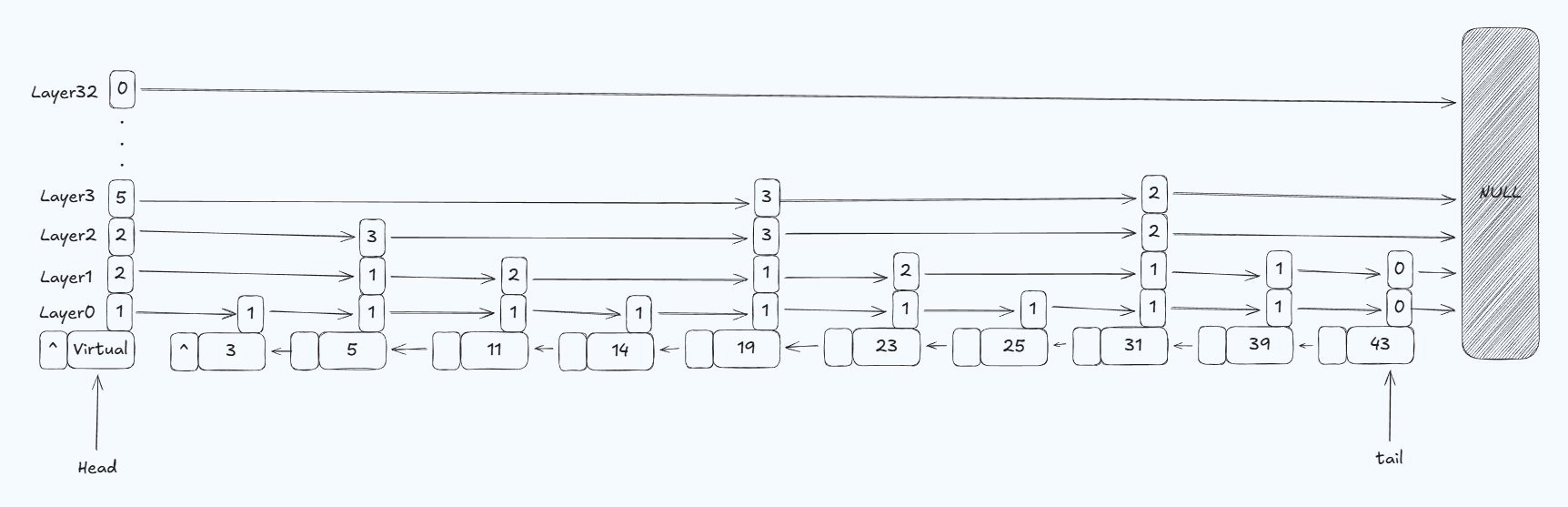 跳跃表的每个节点拥有一个前序指针和多层后继指针。每层后继指针都独立成链,每个节点在插入时,都会按照概率分配给它多少层后继指针(至少一层)。类似抛硬币,落到正面,就给它加一层后继指针,然后继续抛硬币;落到反面就结束。当然,硬币正面的概率不一定是50%(实际有论文提出,包括业内经验来看,25%的概率是对性能和内存占用权衡后的得到的较优选择)。实际上,作者最初考虑过确定性跳表,即第0层是全连接,第1层是隔1个连接,第2层是隔3个连接…但是这样会导致插入和删除需要进行大量调整,复杂度变高,从而引入随机性,不仅简化了插入和删除的操作,并且统计上仍然是接近二分的结构。